


The Land Remembers
Kantamanto: The Afterlife of Clothing
David Donkor (More Life) is an Accra-based Ghanaian artist working with textiles, portraiture, and reclaimed clothing and materials from Kantamanto. His practice reflects on overconsumption and its human impact, drawing attention to those who work within the secondhand clothing economy. Through layered, tactile works, he transforms discarded garments into forms that carry lived experience, connecting material, memory, and shared realities embedded in circulation.
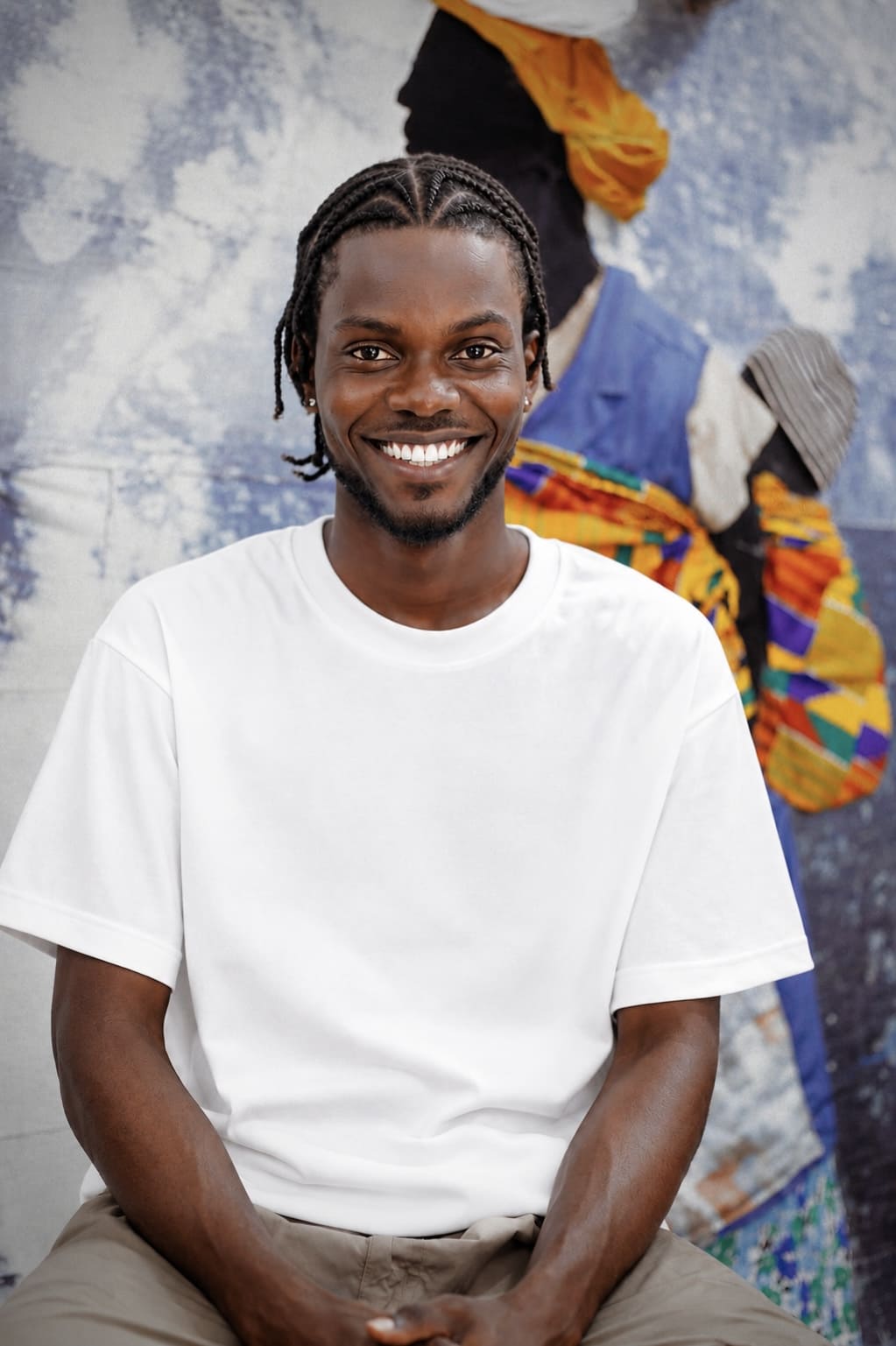
"To me, waste colonialism is about more than where discarded clothes end up. It reflects an imbalance of responsibility, recognition, and voice within the system. These dynamics are rooted in histories that still shape how value and labor are understood today. I am not interested in framing this only through confrontation, but through accountability and mutual respect. Places like Kantamanto are often reduced to endpoints of waste, yet they are powerful spaces of innovation, resilience, and livelihood. People there are not just receiving. They are creating, sustaining, and building entire economies from what exists. What matters to me is recognition and support. When these communities are seen, heard, and properly resourced, their capacity grows even stronger. At the same time, production systems must take responsibility by creating with care and intention. I believe in a more balanced system where responsibility is shared, creativity is valued on all sides, and sustainability is approached with dignity. That is how we move toward a
future that works for everyone."
- David Donkor
"To me, waste colonialism is about more than where discarded clothes end up. It reflects an imbalance of responsibility, recognition, and voice within the system. These dynamics are rooted in histories that still shape how value and labor are understood today. I am not interested in framing this only through confrontation, but through accountability and mutual respect. Places like Kantamanto are often reduced to endpoints of waste, yet they are powerful spaces of innovation, resilience, and livelihood. People there are not just receiving. They are creating, sustaining, and building entire economies from what exists. What matters to me is recognition and support. When these communities are seen, heard, and properly resourced, their capacity grows even stronger. At the same time, production systems must take responsibility by creating with care and intention. I believe in a more balanced system where responsibility is shared, creativity is valued on all sides, and sustainability is approached with dignity. That is how we move toward a
future that works for everyone."
- David Donkor
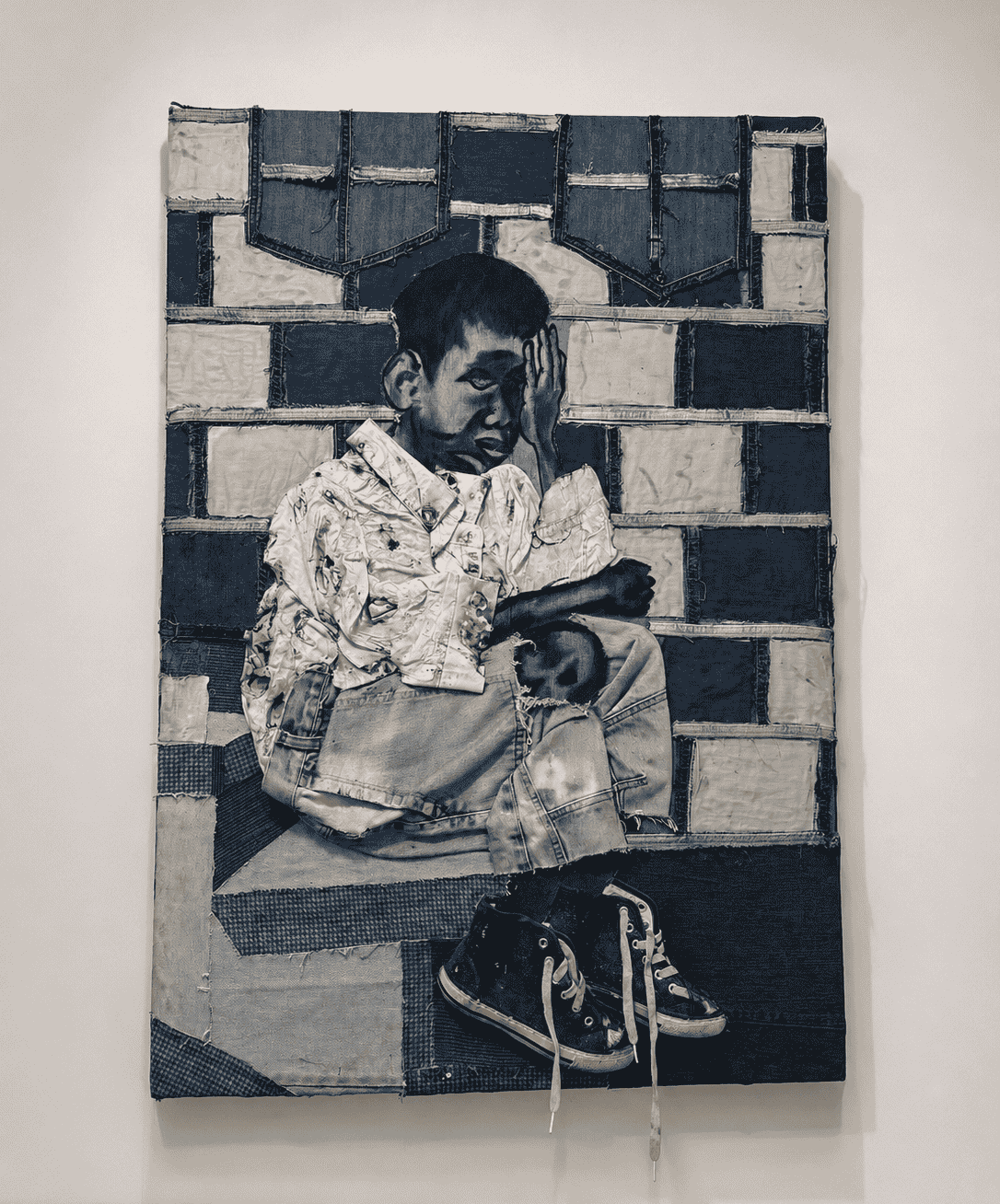
This portrait depicts a young boy seated against a checkerboard background of patched denim, symbolizing the everyday struggle witnessed in the market. The child’s posture and expression reflect the emotional weight of observing his parent’s labor and economic hardship from an early age, highlighting how children absorb the chaos and resilience of their environment. The use of upcycled denim emphasizes sustainability and the reuse of materials to comment on waste and social conditions.
Year: 2025
Medium: Secondhand denim, shoes , shirts and paints
Size: 104 X 105 CM
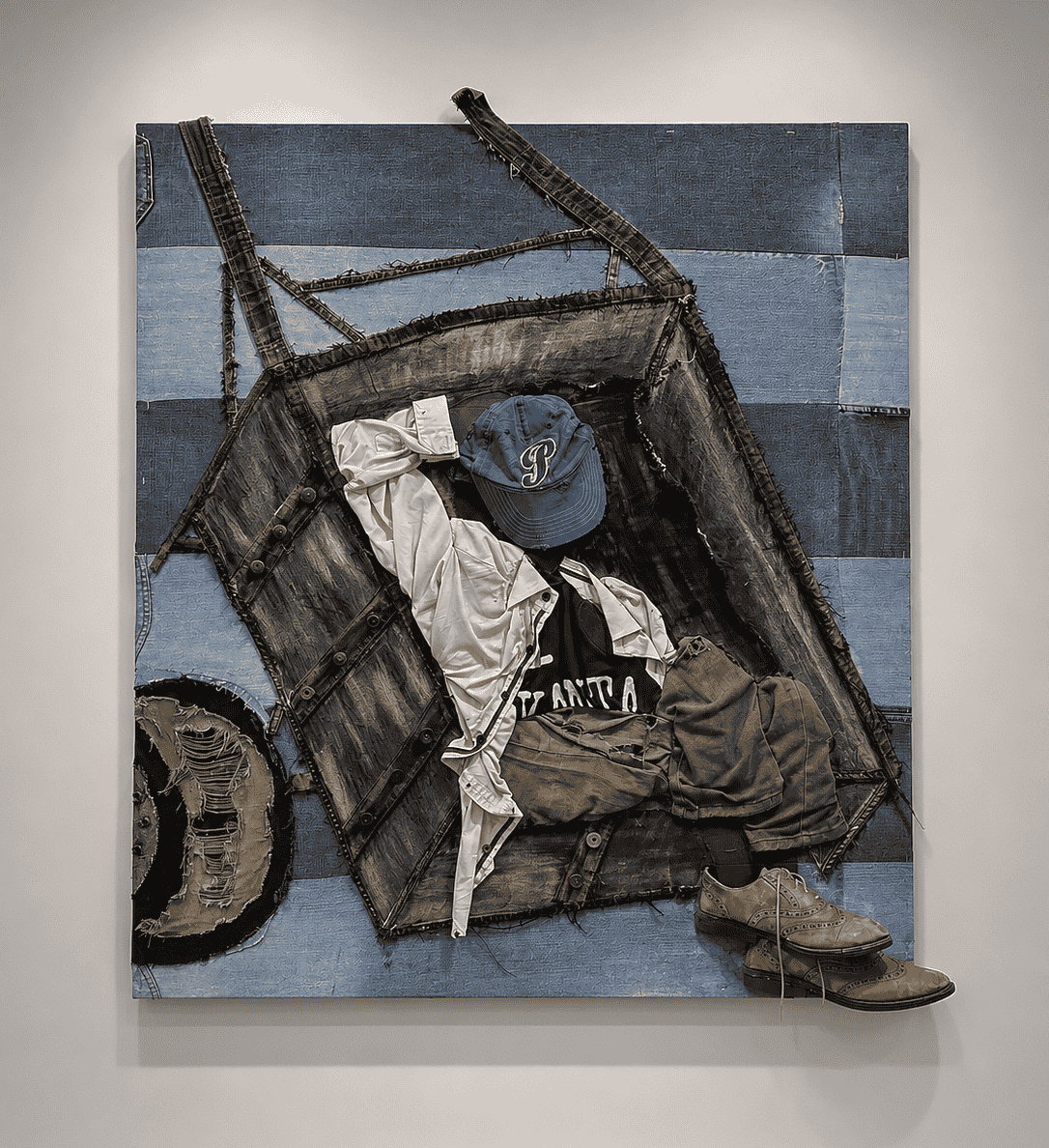
A body folds into itself, held within a fragile structure that feels both shelter and weight. Made from discarded garments sourced in Kantamanto, the work carries the memory of movement,labor, and touch. In this suspended moment, rest becomes uncertain, something borrowed, not owned. The piece lingers between exhaustion and release, where the body pauses, even if the world does not.
Year: 2026
Medium: Mixed media assemblage using reclaimed denim, garments,
and found materials
Size: 103.6 X 104.6 CM
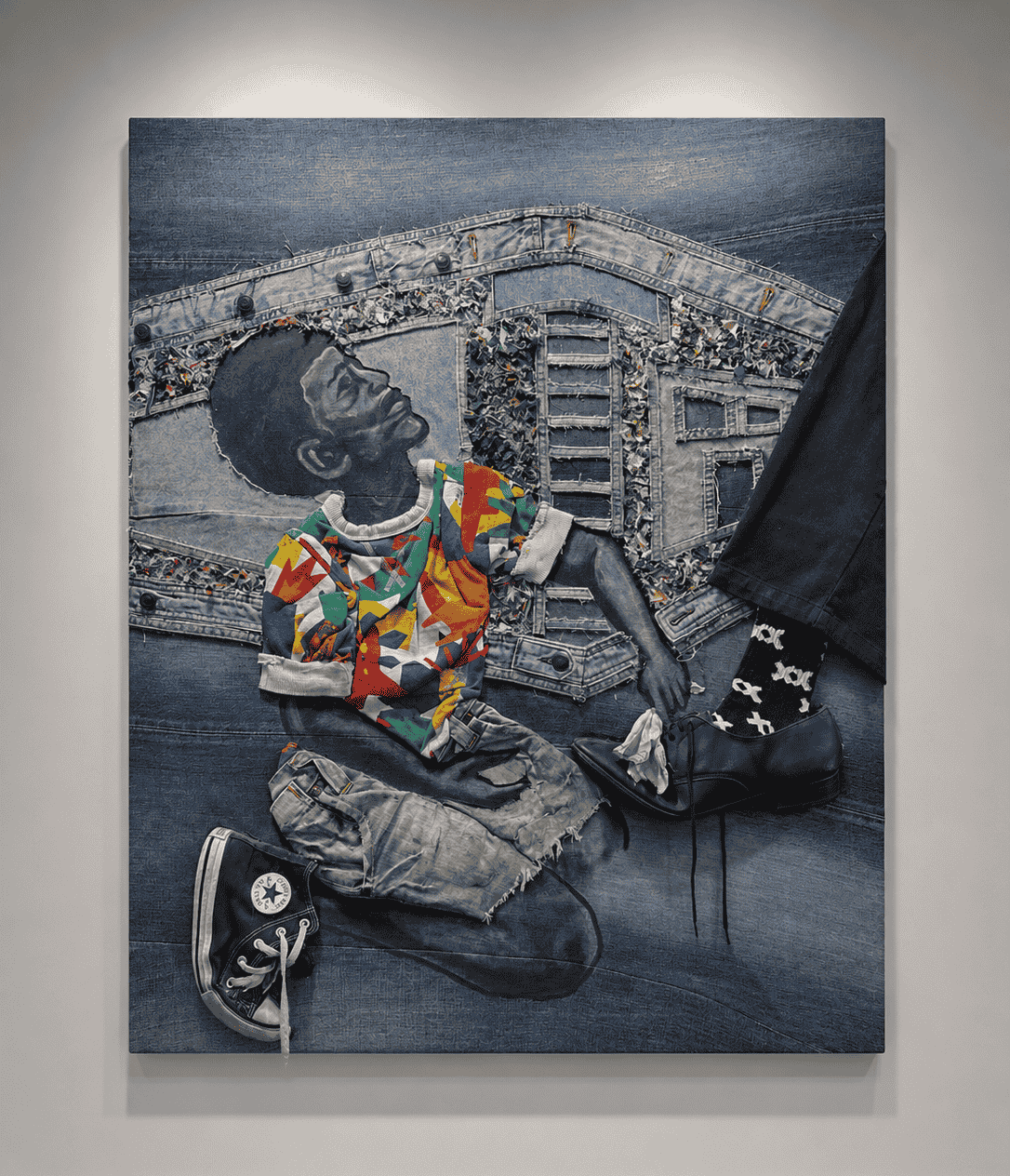
The piece visually captures how children in tough environments like Kantamanto are pushed into early labor or hustle because of the struggles they witness in their parents and community, making it hard for them to pursue school, play, or dream freely.
Year: 2025
Medium :Reclaimed Secondhand denim, shoes, shirts and paints
Size : 104 X 105 CM
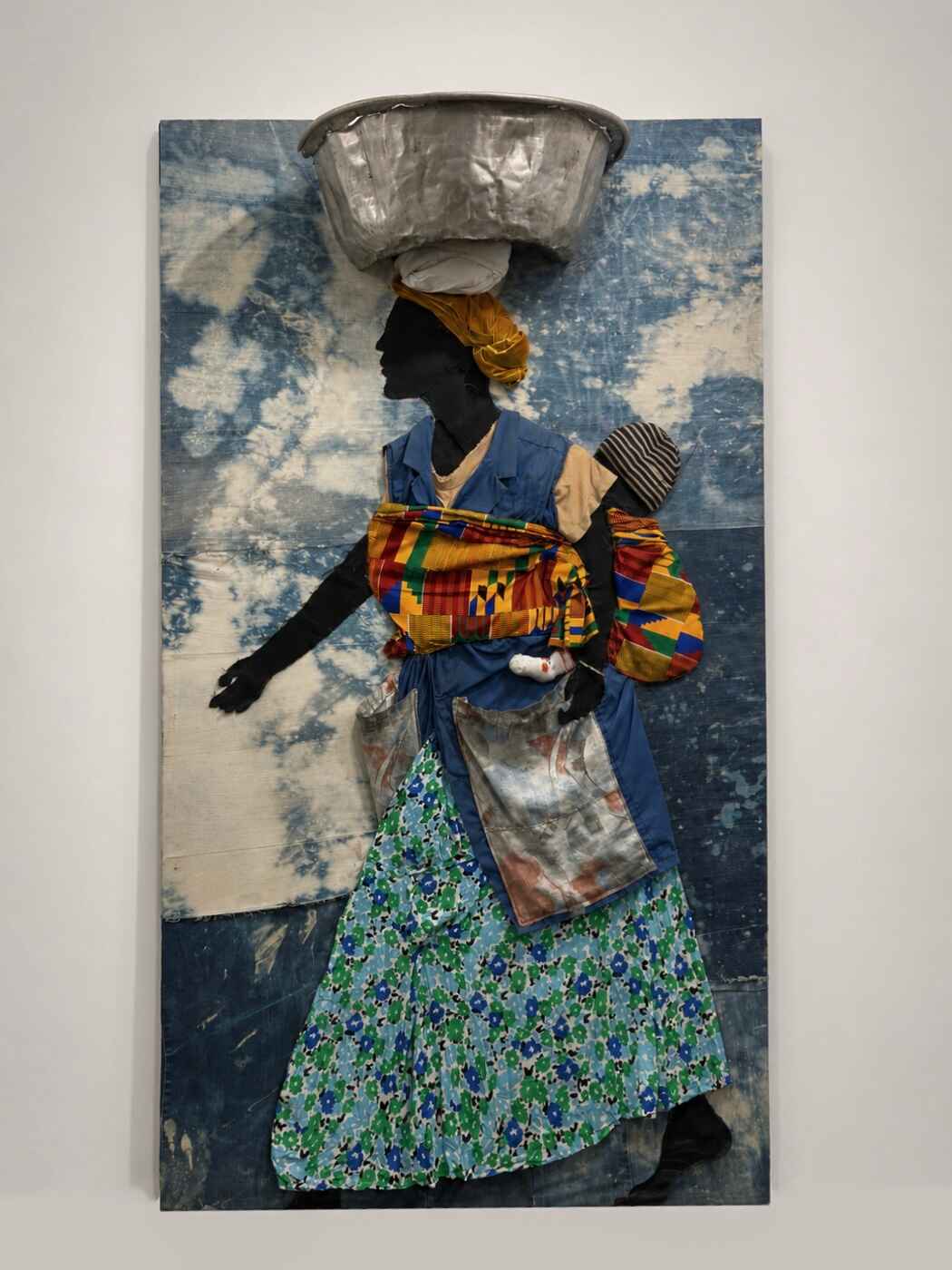
This piece depicts a kayayo in motion, constructed from reclaimed textiles sourced from Kantamanto. Carrying a basin and a child, the figure reflects the layered burdens of labor,care and survival. The materials hold traces of past lives, embedding memory into the work. The silhouette represents a collective experience of endurance, resilience, and the unseen weight carried daily.
Year: 2026
Medium: Mixed media assemblage using reclaimed denim, garments,
and found materials and metal basin
Size: 198 X 108 CM

Get DADDY in your Inbox
Stay in the loop by subscribing to our newsletter
