


The Land Remembers
Shapes of Survival – In Conversation With Chie Marquart-Tabel & Austin Nortey
Janice Faith talks to Chie Marquart-Tabel and Austin Nortey about their artwork, queer survival and resistance.


“You will grow into a
family tree, You will grow
into protest, Queer roots wild
beneath your skin, coiling
themselves around your kin,
Revisit your seedling library”
– FROM ‘SEEDLING LIBRARY’
BY BODI BABATOLA
We sat down with Chie Marquart-Tabel and Austin Nortey, two of the three artists behind the work Defining Survival (Queer Everexistence in Motion) which considers queer survival as a cyclic connection across time and space. The original work invites viewers to lie down on a quilt created in collaboration by Austin and Chie, and watch the movements of Chie’s cardboard sculpture mobile while listening to a poetic sound installation by Bodi Babatola. Since we’re only able to showcase the mobile for The Land Remembers we wanted to have a deeper discussion with the artists about their joint work process, their approach to materials and colours, as well as queer survival and resistance.
To start with, could you introduce us to your artistic practice?
Chie: I’m a visual artist who’s practicing painting, drawing and sculpture,
and trying to combine these mediums in different ways. Drawing feels a bit
like my mother tongue; it’s how I express myself most immediately. And from
there I search for ways to translate and transform. Themes that run through
my work are connection and simultaneity. Connection to the many versions of ourselves, to others and to our ancestry. My lived experience is shaped by the simultaneity of identities, sensations and truth.
Austin: I’m a multi-disciplinary artist with second-hand textiles and objects
as the foundation of my practice. Recently I’ve been working a lot with scrap
metals that I reinterpret and reincarnate into different forms. My work talks
about identity, displacement and finding yourself in unexpected places.


How did you first encounter each other's work and what led to your future collaboration?
Austin: We got connected through Va-Bene Elikem Fiatsi, an artist, curator
and mentor based between Kumasi and Berlin, who runs a scholarship and
mentorship residency that facilitates exchange between emerging Ghanaian
artists internationally.
Chie: The first time we met in person was at the beginning of March 2025, for
the opening of Activist Choreographies of Care at nGbK. Va-Bene had asked
me if I wanted to take part in this group show for queer and Afro-diasporic
artists between Berlin and Kumasi. She introduced me to Austin, and the first
thing I saw was him doing a performance at Kumasi’s scrap metal market. I
started developing an idea of what I would like to show in the space, keeping in mind the work Austin does, and then we got in touch and had our first conversations via WhatsApp. We knew we wanted to talk about rather heavy topics, so we had to figure out how to address them with an attitude of care. That’s why we came up with this idea of creating a space that allows people to rest and return to that resistant power they hold within themselves.
The overarching themes of your work are resistance and surival. How would you define queer survival?
Austin: Growing up in a society that doesn’t accept you means I had to hide
and survive each and every day. When I began my practice, I realised that the
survivor isn’t just me. Queerness isn’t only about me. My work is queer. The
metals that I work with are queer. I see it in the ways they bend and transform in my hands and it makes me feel less alone, knowing that queerness exists in so many forms. My connection with my art is what keeps me going and what keeps me strong. Survival is an everyday practice. We survive with all that we do and everything we are.
Chie: I think for me, this idea of survival comes from a place of fear about
what the future may hold for us. And it also comes from this portrayal of
queerness as something defiant, like the plants in someone’s garden that
they’re trying to get rid of. This narrative that queerness isn’t African.
There’s this fascist idea that we’re all supposed to be the same and then
calling that the “natural” way of things, when nature is actually so diverse.
I really started looking at nature as an example of resistance because it
will always grow back, no matter how many times we try to control and
dominate it. The seeds have already taken root. I think it’s really special
that we get to see our queer selves as part of a lineage and can look at all
the queer Africans who have existed before us.
Austin: I remember someone asking me, “ Why is it that queer people are
so smart and successful?” [everybody laughs] It’s because we’ve been
surviving since day one. We need to be creative about how we live, how
we exist, and we will always find a way.
How did you first encounter each other's work and what led to your future collaboration?
Austin: We got connected through Va-Bene Elikem Fiatsi, an artist, curator and mentor based between Kumasi and Berlin, who runs a scholarship and mentorship residency that facilitates exchange between emerging Ghanaian artists internationally.
Chie: The first time we met in person was at the beginning of March 2025, for the opening of Activist Choreographies of Care at nGbK. Va-Bene had asked me if I wanted to take part in this group show for queer and Afro-diasporic artists between Berlin and Kumasi. She introduced me to Austin, and the first thing I saw was him doing a performance at Kumasi’s scrap metal market. I started developing an idea of what I would like to show in the space, keeping in mind the work Austin does, and then we got in touch and had our first conversations via WhatsApp. We knew we wanted to talk about rather heavy topics, so we had to figure out how to address them with an attitude of care. That’s why we came up with this idea of creating a space that allows people to rest and return to that resistant power they hold within themselves.
The overarching themes of your work are resistance and surival. How would you define queer survival?
Austin: Growing up in a society that doesn’t accept you means I had to hide and survive each and every day. When I began my practice, I realised that the survivor isn’t just me. Queerness isn’t only about me. My work is queer. The metals that I work with are queer. I see it in the ways they bend and transform in my hands and it makes me feel less alone, knowing that queerness exists in so many forms. My connection with my art is what keeps me going and what keeps me strong. Survival is an everyday practice. We survive with all that we do and everything we are.
Chie: I think for me, this idea of survival comes from a place of fear about what the future may hold for us. And it also comes from this portrayal of queerness as something defiant, like the plants in someone’s garden that they’re trying to get rid of. This narrative that queerness isn’t African. There’s this fascist idea that we’re all supposed to be the same and then calling that the “natural” way of things, when nature is actually so diverse. I really started looking at nature as an example of resistance because it will always grow back, no matter how many times we try to control and
dominate it. The seeds have already taken root. I think it’s really special that we get to see our queer selves as part of a lineage and can look at all the queer Africans who have existed before us.
Austin: I remember someone asking me, “ Why is it that queer people are so smart and successful?” [everybody laughs] It’s because we’ve been surviving since day one. We need to be creative about how we live, how
we exist, and we will always find a way.
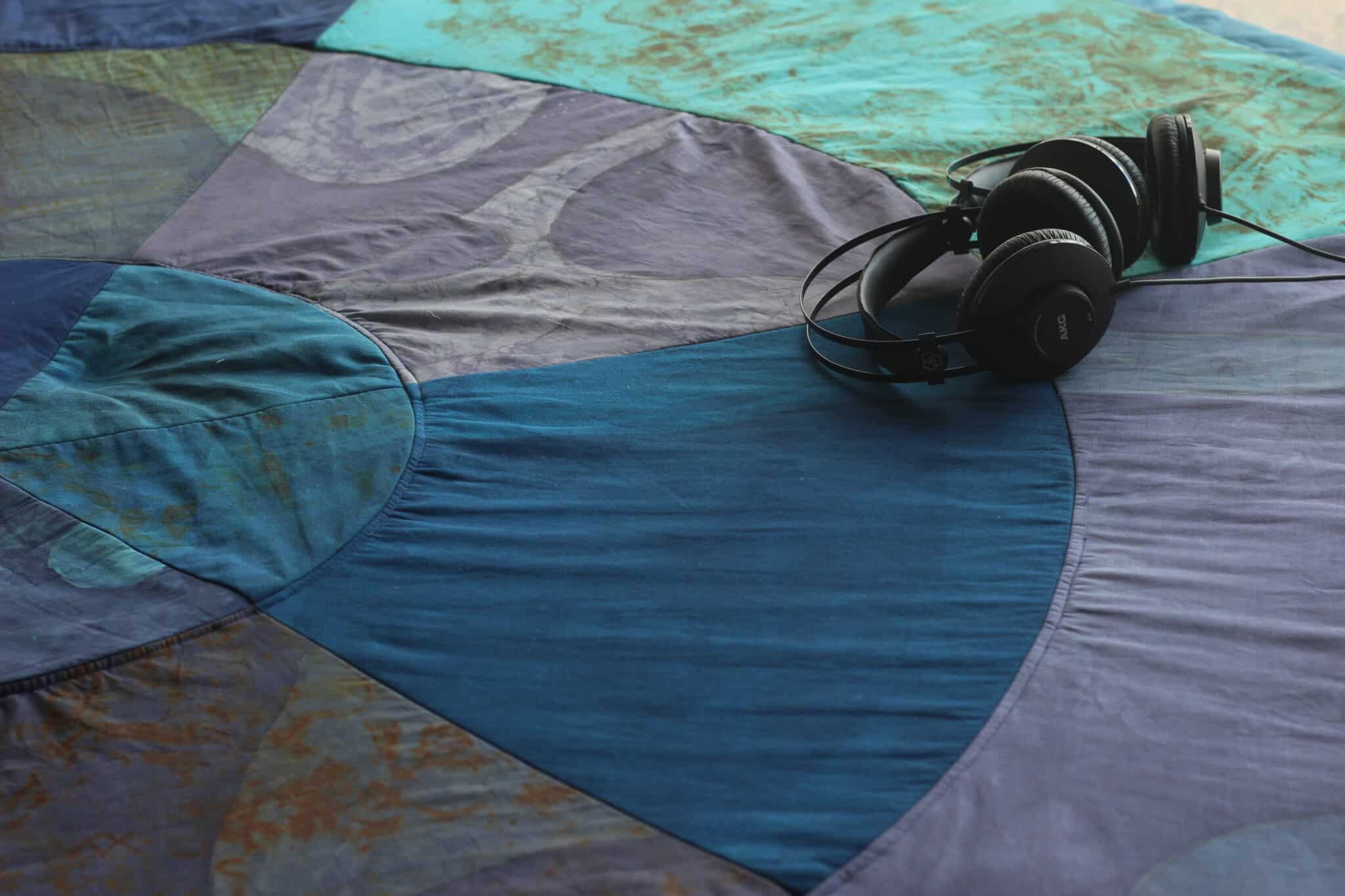

Your work combines scrap metal, textile work and cardboard sculptures. What was it like to combine these different materials and how do they translate the work?
Austin: I work with secondhand materials that have been rejected from
Europe and end up in West Africa. The fabrics I source carry so many
traces of histories, of connection. Who was using it? What’s their story?
Was it a queer person? I also work with local scrap metal, so I basically
bring together all the rejects. As a queer person, I know too well what it
feels like to be rejected. So I figured out that these two different materials
from two different geographical locations tell my story of rejection. The
fabric says, I give you my surface, and the metal says, I give you my colour.
And together they tell this beautiful story.
Chie: The idea of each of these materials coming with their own story is also
really important to me because I generally don’t like using new materials
in my practice. I ask myself, why did someone get this in the first place?
In this capitalist system, it was probably to meet some kind of need or to
fill an emptiness. So, to me, all these discarded objects are like attempts to
become a certain version of ourselves. It’s so easy to see objects as only
existing from the moment we buy them until we get rid of them, but they
already had a history before, and they will keep existing afterwards. I like the
idea of getting these materials back to people to show them they’re still here.
Can you tell us more about the colours you used for this project and how you developed those?
Chie: I keep coming back to blue but you can see that throughout so many
cultures. Oftentimes, blue is linked to spirituality and you can find it in a lot
of African and Afro-diasporic art. I use blue when I speak about moments of
connection, of pause and being part of something bigger, deeper and truer.
Austin: We created the design through wax dye. It was a really interesting process because wax is also a form of resistance. And because we had such a variety of textiles they all absorb the dye differently. We also tried something quite new, which is dyeing with metal and wax together. I decompose the metals in food chemicals like lime and salt, and at some point they will take on a powdery form that I can use to dye fabrics. Usually dye bleeds but once the metal print gets onto the fabric, it stays. It says, I want to live, and the wax on the other hand says, I resist and it’s such an interesting process to watch and explore.
How does your piece connect to this exhibition's theme "The Land Remembers"?
Chie: It’s in the quilt, in the textiles, the cardboard bits where you can still see the label of whatever it used to package before and the scrap metals that hold them together. The whole work is a way of saying, the land remembers. I also like to draw the parallel from land to body and apply this saying to ourselves and all the different versions that we carry. Versions that we tried on, that worked for a time but stopped working at some point. Our piece is a reminder to sit with these versions and to remember them.
Your work combines scrap metal, textile work and cardboard sculptures. What was it like to combine these different materials and how do they translate the work?
Austin: I work with secondhand materials that have been rejected from Europe and end up in West Africa. The fabrics I source carry so many traces of histories, of connection. Who was using it? What’s their story? Was it a queer person? I also work with local scrap metal, so I basically bring together all the rejects. As a queer person, I know too well what it feels like to be rejected. So I figured out that these two different materials from two different geographical locations tell my story of rejection. The fabric says, I give you my surface, and the metal says, I give you my colour. And together they tell this beautiful story.
Chie: The idea of each of these materials coming with their own story is also really important to me because I generally don’t like using new materials in my practice. I ask myself, why did someone get this in the first place? In this capitalist system, it was probably to meet some kind of need or to
fill an emptiness. So, to me, all these discarded objects are like attempts to become a certain version of ourselves. It’s so easy to see objects as only existing from the moment we buy them until we get rid of them, but they already had a history before, and they will keep existing afterwards. I like the idea of getting these materials back to people to show them they’re still here.
Can you tell us more about the colours you used for this piece and how you developed those?
Chie: I keep coming back to blue but you can see that throughout so many cultures. Oftentimes, blue is linked to spirituality and you can find it in a lot of African and Afro-diasporic art. I use blue when I speak about moments of connection, of pause and being part of something bigger, deeper and truer.
Austin: We created the design through wax dye. It was a really interesting process because wax is also a form of resistance. And because we had such a variety of textiles they all absorb the dye differently. We also tried something quite new, which is dyeing with metal and wax together. I decompose the metals in food chemicals like lime and salt, and at some point they will take on a powdery form that I can use to dye fabrics. Usually dye bleeds but once the metal print gets onto the fabric, it stays. It says, I want to live, and the wax on the
other hand says, I resist and it’s such an interesting process to watch and explore.
How does your piece connect to this exhibition's theme "The Land Remembers"?
Chie: It’s in the quilt, in the textiles, the cardboard bits where you can still see the label of whatever it used to package before and the scrap metals that hold them together. The whole work is a way of saying, the land remembers. I also like to draw the parallel from land to body and apply this saying to ourselves and all the different versions that we carry. Versions that we tried on, that worked for a time but stopped working at some point. Our piece is a reminder to sit with these versions and to remember them.


Get DADDY in your Inbox
Stay in the loop by subscribing to our newsletter
